
Ask this question in a Texas neighborhood group and you'll get two confident, opposite answers within minutes. 'We've had one for six years, bills dropped, never think about it.' 'My cousin had one in 2021 and froze — never again.' Both people are describing real experiences. Only one of them is describing the technology.
So let's give the question the straight treatment, because it deserves better than dueling anecdotes: yes, heat pumps work in Texas — our climate is close to the best case in America for them — and the skepticism, while historically earned, is aimed at equipment and installs from a different era.
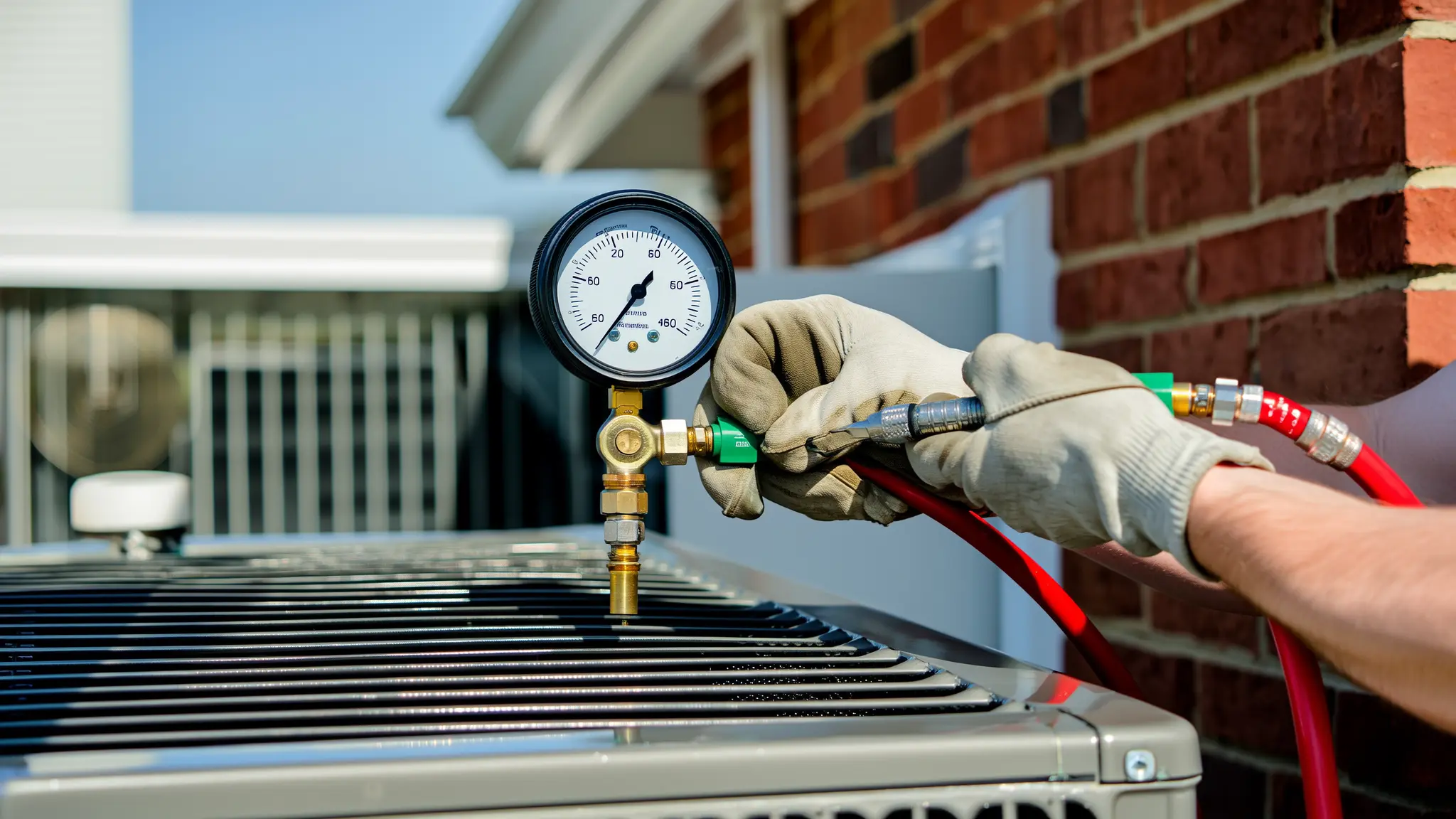
Start with what the machine is, because half the argument dissolves on contact with this paragraph: a heat pump is an air conditioner with a reverse gear. In summer it is an AC — same refrigeration cycle, same performance, same ratings, indistinguishable at the vent. In winter it runs the cycle backward, harvesting heat from outdoor air (yes, cold air contains heat — thermodynamics is generous down to well below freezing) and moving it inside at two to three times the efficiency of generating heat from scratch.
Now overlay Texas: a climate that demands seven months of air conditioning — the job a heat pump does natively — and two-to-three months of mostly mild heating, concentrated in the 35–55°F band where heat pump efficiency is at its absolute peak. The hard part of our climate is the part the machine already is; the mild part is the part it's best at. That's why every new-construction corridor from Leander to Kyle now specs heat pumps by default, and why the furnace comparison keeps tilting further each equipment generation.
What about the cousin who froze? That's a real category of story with a specific anatomy — pre-modern equipment, resistance-strip dependence, and a grid failure that would have idled a gas furnace's blower just the same — and it gets its own honest section below rather than a hand-wave.
Skip the search-ad roulette. Tell us once, and we'll match you with a licensed, vetted Central Texas pro — price quoted before any work.
Here's the case, the counter-case, and the numbers.
Run the hours: a Central Texas home logs roughly 2,500–3,000 cooling hours against 400–700 heating hours, and most of those heating hours sit in the 35–55°F band. Heat pump performance in that band is spectacular — coefficients of performance of 3–4, meaning three to four units of heat delivered per unit of electricity bought. The gas furnace it replaces cannot exceed one unit per unit, ever, plus the standing monthly gas fee for the privilege.
Summer performance anxiety is a category error: cooling is identical because the machine is an AC. Nobody has ever suffered a Texas August because their system was a heat pump — August doesn't know the difference.
The economics compound from there: purchase parity (heat pump replacements now price within a couple thousand of AC-plus-furnace, per the comparison guide), the federal 25C credit's $2,000 heat-pump tilt, utility rebate menus leaning the same way, mild-winter operating savings of $20–50/month, and — for furnace-only-gas households — the option to close the gas account and its $200–300/year of base fees entirely.
And the fit cases multiply in this housing stock: all-electric Hill Country homes running resistance strip heat (the single most upgrade-rewarded swap in the region — the strips demote to backup and winter bills fall hard), mini-splits solving Texas's casita-and-bonus-room addiction, and dual-fuel configurations for the estate tier. The technology has a Texas-shaped answer at every price point.
What actually happened to heat pump households in Uri: three failure modes stacked. Old single-stage units lost capacity in unprecedented cold and leaned on electric resistance backup strips — which heat fine but draw enormously — right as the grid began shedding load; then outages idled everything, heat pumps and gas furnaces alike (a furnace without electricity for its blower and controls is a cold metal box); and homes built for July hemorrhaged heat through envelopes never designed for 6°F. The freeze indicted the grid and the housing stock far more than any heating technology — but the heat pump stories traveled furthest.
What's different in 2026 equipment: cold-climate-rated variable-speed units hold 70–80% of capacity into the low 20s and keep meaningful output into the teens — Uri temperatures — with smarter defrost cycles and staged, rather than all-or-nothing, backup heat. For the few hundred hours a normal Texas winter spends below 35°, properly sized modern equipment simply performs; for the once-a-decade polar event, backup strips exist, cost a brief honest premium, and — crucially — require the same functioning grid a furnace does.
The honest residual risks, named: an undersized heat pump or one with mis-configured backup staging will lean on strips too early and bill accordingly (an install-quality problem, the industry's actual recurring sin); resistance-heavy operation during a long polar snap is genuinely expensive for those days; and extended grid failure defeats everything except a fireplace and a generator. Buyers for whom that last scenario is decisive should read the dual-fuel section of the comparison guide — it exists precisely for them.
The 2026 buyer's math in one paragraph: installed cost $9,500–$18,000 for typical replacements (near parity with AC-plus-furnace), minus up to $2,000 federal 25C, minus utility rebates (Austin Energy, PEC, and friends per the rebate map), minus off-season timing; operating delta of $20–50/month winter savings at current rates plus possible gas-account retirement; lifespan 12–15 Texas years, same as any AC, because summer is the punishing season either way; maintenance identical to an AC plus a fall heating check.
Who should still say no, honestly: households with a healthy young AC (never scrap working equipment to force the conversion — wait for the natural replacement moment); multi-appliance gas homes where rates and infrastructure genuinely favor staying (run both quotes; sometimes the furnace wins on the spreadsheet, and that's fine); the blast-heat devotees who want 110° supply air on a cold morning as a lifestyle (heat pumps deliver steadier, gentler warmth — some people hate it, and preferences are legitimate); and anyone whose installer can't demonstrate heat-pump fluency — a mis-designed heat pump is worse than a well-installed anything.
The bottom line, delivered as promised: the question was never whether heat pumps work in Texas — they work best in climates shaped exactly like ours. The question is whether your house, your gas situation, and your replacement timing make this the moment. That's a two-quote question any vetted local installer can answer in one visit — and in 2026, betting against the heat pump quote requires increasingly specific reasons.
Survey the Texans who've run heat pumps through several seasons and the reports converge on a few themes. The winter surprise: heat arrives steadier and quieter than the furnace blast they grew up with — vents run warm-not-hot for longer stretches, rooms hold temperature evenly, and the first reaction ('is it even working?') gives way by February to preferring it. The bill reality: summer unchanged (it's the same AC), winter noticeably cheaper, and the furnace-only-gas households who closed the account report the base-fee retirement as the sneaky-best line item. The freeze test: modern units through recent cold snaps held capacity fine, with backup strips cycling briefly on the coldest mornings — expensive for those hours, invisible across the season. And the single consistent complaint: installs where backup staging was configured lazily, letting strips run more than they should — the install-quality sin this series keeps flagging, fixable in one service visit by anyone who checks the settings. The pattern across all of it: the technology stopped being a debate for owners years before it stopped being one online. The houses are comfortable, the bills are lower, and the argument is mostly being carried by people who don't have one.
For the spec-curious, the shopping vocabulary in one paragraph: look for variable-speed or at least two-stage compressors (the comfort and efficiency backbone), HSPF2 ratings comfortably above the 7.5 regional floor, cold-climate ratings if freeze anxiety runs high, and backup heat staged in increments rather than one giant strip bank — that staging is what keeps polar-snap electric bills civilized. Pair any of it with the commissioning documentation this series keeps demanding, and the equipment will spend fifteen years making the argument for you.
Renters and new-build buyers, your version: ask what heating technology the property runs before signing — all-electric with resistance strips is the expensive legacy configuration, and a heat pump line item on a builder's options sheet is one of the few upgrades that pays the buyer rather than the builder.