
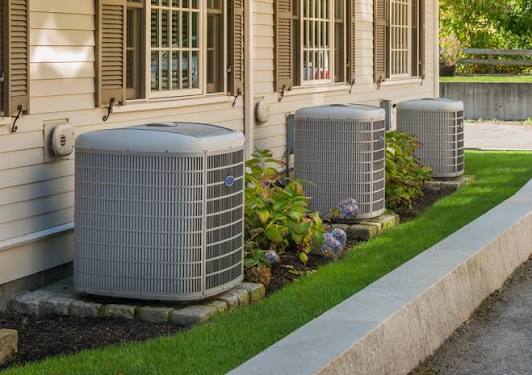
There's a federal program that will hand you up to $2,000 back on a heat pump, or up to $600 on a qualifying air conditioner, and a startling number of Texas homeowners either haven't heard of it or assume it's the kind of rebate mirage that evaporates when you read the fine print. It isn't. It's a tax credit — Section 25C, the Energy Efficient Home Improvement Credit — and it's real, annual, and criminally under-claimed.
The reason it's under-claimed is mundane: it happens at tax time, months after the sweaty afternoon you bought the equipment, and if your installer never mentioned it and nobody handed you the certificate, the money just quietly doesn't happen.
So consider this the guide your installer should have handed you. What 25C pays, exactly which equipment qualifies (this is where most claims die), the paperwork that takes ten minutes in July and saves an argument in April, how the credit stacks with Austin Energy and co-op rebates, and the handful of gotchas — including the fact that a credit is not a check, which matters for some households more than others.
The headline mechanics: 25C refunds 30% of qualified project cost, capped by category. Central ACs: up to $600. Heat pumps and heat pump water heaters: up to $2,000 — the number that quietly reshapes the heat pump vs furnace decision. Furnaces and boilers: up to $600. Plus smaller caps for related work like panel upgrades tied to qualifying equipment. These are annual caps, not lifetime — a fact with a strategy attached, covered below.
One scope note for 2026: energy-credit provisions have been a political football, and program details can shift with tax legislation. Everything here reflects the rules as commonly applied at this writing — confirm current-year specifics with your tax preparer or IRS guidance before filing, and treat any installer's 'guaranteed credit' promise with the same skepticism as a guaranteed stock tip.
Skip the search-ad roulette. Tell us once, and we'll match you with a licensed, vetted Central Texas pro — price quoted before any work.
Here's how to actually collect.
25C doesn't reward buying 'an efficient system' — it rewards buying specific efficiency thresholds, generally keyed to CEE (Consortium for Energy Efficiency) tiers. In practice for Texas: qualifying central ACs need to clear numbers that baseline 14.3 SEER2 equipment typically doesn't — think ≥16 SEER2 territory — and qualifying heat pumps must clear SEER2/EER2/HSPF2 combinations that mid-tier and better equipment hits comfortably.
Translation into shopping behavior: the credit effectively discounts the equipment tier you probably wanted anyway. The $600 AC credit narrows the gap between builder-grade and 16+ SEER2; the $2,000 heat pump credit frequently makes the heat pump cheaper than the straight-AC path at equal quality.
The verification tool: AHRI certificates. Every real system pairing has an AHRI reference number documenting its tested ratings, and it's the document that connects your invoice to the thresholds. Demand it at quote time — 'which exact pairing, and does it clear 25C thresholds?' — and make qualifying model numbers a written line in the contract, not a verbal assurance.
Also eligible under the same 25C umbrella, with their own caps: heat pump water heaters (inside the $2,000 heat pump bucket — see the water heater guide's hybrid section), plus insulation and air sealing at up to $1,200 — relevant if you're doing duct and attic work alongside the equipment.
At purchase: keep the itemized invoice showing equipment and installation costs separately identified; collect the AHRI certificate; and get the Manufacturer's Certification Statement (a PDF every brand publishes for qualifying models — installers can produce it in thirty seconds, or their distributor can). New for recent program years: qualifying equipment carries a manufacturer PIN that goes on your return — confirm your installer supplies it.
At filing: IRS Form 5695, Residential Energy Credits, alongside your regular return. The form asks for costs by category and computes the credit; your preparer needs the numbers above, or tax software walks you through it in minutes.
The gotcha that matters: 25C is a nonrefundable credit — it offsets tax you owe, and won't produce a refund beyond your liability, nor carry forward. Most working households with a $2,000 credit have well over $2,000 in annual federal tax liability, so it's a non-issue — but for retirees and low-liability filers, checking this before counting the money is the responsible move.
Timing tactic: the caps are annual. A heat pump in December and a heat pump water heater in January claims both at full value across two tax years — worth an intentional two-week delay on a two-project plan.
25C stacks with local programs — federal credit on your taxes, utility rebate on your project cost, no either/or. Austin Energy runs HVAC rebate programs for its customers (see the Austin Energy guide), PEC and other Hill Country co-ops run their own (the PEC guide), and CPS, Bluebonnet, and Oncor-territory retailers each have variations. Program budgets are annual and occasionally exhaust — one more argument for the off-season purchase when budgets are fresh.
One interaction worth knowing: some utility rebates technically reduce your project's cost basis before the 30% federal calculation. On typical project sizes the caps bind anyway and the difference is zero; your preparer sorts the edge cases.
The realistic full stack on a qualifying heat pump replacement: $2,000 federal + hundreds to $1,000+ utility + off-season pricing + manufacturer promotion = $3,000–$4,500 of real reduction on a project that quoted five figures. That's not marketing math; it's paperwork math, and it's why the quote conversation should always include the incentive worksheet.
The quote-stage script, three lines: 'Quote me a pairing that clears 25C thresholds, with the AHRI number in writing.' 'List every utility rebate this qualifies for and who files it.' 'Include the manufacturer certification and PIN with my closing paperwork.' Contractors fluent in those three sentences are disproportionately the ones who do everything else right too — incentive fluency and install quality travel together, which is exactly the filter our network applies.
At tax time: Form 5695, the folder from your boring afternoon, ten minutes. If a preparer waves it off as not worth the trouble, that's a $600–$2,000 opinion — get a second one.
And the strategic framing for anyone mid-decision: run your repair-or-replace math with the credit included. A $2,000 federal thumb on the scale moves borderline cases decisively toward the qualifying replacement — which is, transparently, the policy's whole intent. Take the intent; it's funded.
The credit's failure modes are depressingly consistent, so here they are as a pre-flight checklist. Buying non-qualifying equipment by accident: the baseline-tier system that saved $1,200 upfront and forfeited $2,000 at tax time — always run the qualifying-vs-not comparison before signing, because the net math frequently inverts the sticker order. Losing the paperwork chain: no AHRI certificate, no manufacturer certification, no PIN — recoverable with installer cooperation, miserable in April, trivial in July; collect at closeout. Assuming the contractor filed something: 25C is claimed on your tax return, period — contractors file utility rebates, you file Form 5695, and households that assumed otherwise discover the gap a year later. Splitting a qualifying project across the wrong tax years: the install completion date governs, so a December-signed, January-installed project claims in the new year — plan deliberately rather than discovering accidentally. And the nonrefundable surprise: retirees and low-liability filers counting on a $2,000 'check' that their tax bill can't absorb — five minutes with a preparer before purchase sets expectations correctly. None of these mistakes is exotic; all of them are one checklist away from extinct. Print the folder list, ask the three quote-stage questions, and the credit becomes what Congress intended: boring, reliable money.
Landlords and second-home owners, your asterisk: 25C applies to existing homes you use as a residence — rental properties you don't occupy generally don't qualify for these particular credits, though other provisions (and depreciation math) apply to rentals. Mixed-use and duplex situations get nuanced fast; that's a preparer conversation, not a guess. Owner-occupants, meanwhile, can claim on more than one home they actually live in during the year — another detail worth five minutes before assuming.
And keep perspective on the effort-to-money ratio: the entire compliance burden here is one folder and one tax form for up to $2,000 — per year, across multiple project years if you're phasing upgrades. There is no better-paid paperwork in home improvement.