
The $499 water heater install does not exist. It's advertised all over Austin — mailers, search ads, truck doors — but by the time the teaser price meets your actual garage, it has grown a pan, an expansion tank, a permit, code-required strapping, haul-away, and a 'your-installation-is-nonstandard' adjustment, and the invoice says $1,900. The teaser was never a price; it was bait with a dollar sign.
So let's do this properly: real all-in numbers for 2026, by fuel and by technology, with the code items that belong in every legitimate Austin-area quote — so the next time a truck-door price winks at you, you'll know exactly what it's hiding.
Why pricing here needs its own article: Texas code and Central Texas water both shape the bill. Code requires items that softer climates skip debating — thermal expansion control on our closed systems, pans and drains for the attic installs Texas builders love, seismic strapping in some jurisdictions. And our limestone-hard water shortens equipment lifespans enough that install quality and protection (anode checks, softener conversations) are financial decisions, not fussiness.
Quick market map before the table: standard tank replacements are the volume business, tankless conversions are the growth business, and heat pump water heaters are the quiet newcomer with the fattest rebates. All three price differently, and all three have a right customer.
One rule up front, non-negotiable: water heater installs need permits in Austin and every surrounding jurisdiction, and unpermitted installs surface at resale, in insurance claims, and in warranty disputes. A quote without a permit line isn't cheaper — it's incomplete, and it's telling you about every other line.
Skip the search-ad roulette. Tell us once, and we'll match you with a licensed, vetted Central Texas pro — price quoted before any work.
The numbers:
| Installation | All-in Austin range | Notes |
|---|---|---|
| 40–50 gal gas tank, like-for-like | $1,500–$2,600 | The standard swap |
| 40–50 gal electric tank | $1,300–$2,300 | Simpler venting; cheaper install |
| Attic install (either fuel) | +$300–$700 | Access labor, pan/drain requirements |
| Power-vent gas models | +$400–$900 | Where venting requires it |
| Gas tankless conversion | $3,500–$6,500 | Venting, valves, usually gas upsize |
| Tankless swap (existing tankless) | $2,500–$4,000 | Infrastructure already in place |
| Heat pump (hybrid) water heater | $2,800–$4,800 | Before up-to-$2,000 federal credit |
| Code catch-up bundle (expansion tank, pan, strapping, valves) | $300–$800 | Legitimately required; get it itemized |
The spread within each row is location (garage floor vs attic corner), venting complexity, jurisdiction, and brand tier. The spread between quotes for identical scope is business model — same physics as our plumber cost guide, worth reading beside this one.
Emergency no-hot-water premiums run modest if you call in the morning; same-day replacement is routine for stocked standard sizes. The 6pm Friday failure may cost a cold-shower weekend or an after-hours premium — your call, honestly priced either way by the right shop.
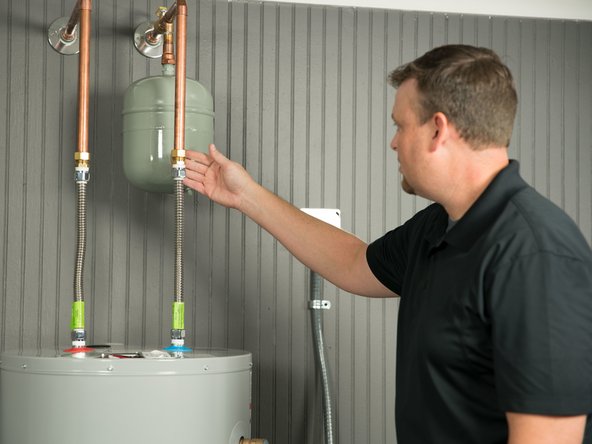
Thermal expansion tank: our systems are 'closed' (PRVs and check valves), so heated water has nowhere to expand except pressure spikes that fatigue the tank and every fixture. The $150–$300 expansion tank absorbs it. Skipping it shortens the new heater's life and, in some brands, thins the warranty.
Pan and drain for elevated installs: a water heater above living space fails as a ceiling event. The pan-with-routed-drain is the difference between 'huh, the pan's wet' and a five-figure claim. Attic units should also get a float cutoff switch — cheap insurance the good installers include unasked.
T&P discharge routing, strapping where required, sediment traps and drip legs on gas, dielectric unions where metals meet: individually small, collectively the difference between an install and an incident. Every one should be an itemized line, not a mystery bundle — transparency here is how you audit an installer's whole character.
And the permit: $100–$300 of jurisdiction fee plus the installer's handling. The inspection that follows is a free second set of eyes on gas connections and venting. People who sell you out of the permit are selling you their shortcut.
Like-for-like gas tank: the default for a reason — cheapest path back to hot water, familiar behavior, 8–12 local years with flushing. Right answer for tight budgets, near-term moves, and rentals.
Electric tank: simpler installs and often the only option where gas isn't plumbed; slower recovery, cheaper hardware. If you're electric anyway, look hard at the hybrid before defaulting here.
Heat pump (hybrid) water heater: 3–4× the efficiency of resistance electric, eligible for up to $2,000 of federal 25C credit plus utility incentives, and happiest in exactly what Texas has — warm garages with air to harvest. Costs more upfront, needs condensate handling and a bit of clearance, dehumidifies the garage as a side effect. For electric households planning to stay, the strongest math on this list.
Gas tankless: endless supply, wall-mounted, 20-year horizon — priced accordingly and dependent on annual descaling in our water. The full argument lives in the tankless vs tank guide; the pricing reality lives in the table above.
Whichever lane: in Central Texas water, ask every bidder what the plan is for hardness — softener loop, anode strategy, descaling schedule. Bidders without an answer are installing appliances into a wood chipper.
Get the all-in number with model number, code items itemized, permit included, haul-away stated, and warranty terms in writing — both the manufacturer's (6, 9, or 12-year tiers) and the installer's labor coverage. Ask who registers the equipment; unregistered units often default to shorter coverage.
Compare two or three quotes on identical scope, and weight responsiveness: water heaters are the appliance you replace under duress, and the shop that answers at 8am beats the marginally cheaper one that calls back Thursday.
Timing leverage exists here too: heaters fail disproportionately in the first cold snap (incoming water temperature drops, thermal stress spikes). If yours is 10+ years old and rumbling, replacing on your schedule in October beats replacing on its schedule in January — same physics of demand as every trade.
Or compress the whole process: one form, and a licensed, vetted local plumber quotes your actual install — correct code items, real permit, price before work — in Austin, Cedar Park, Kyle, or wherever your tank is plotting.
If your heater is under 8 and healthy, the maintenance rhythm is simple and mostly ignored: drain a few gallons annually (fully flush if it's never been done — gently, on old tanks), test the T&P valve, and have the anode rod checked around year 4–5. In our water, a $50 anode swap at mid-life is the single cheapest lifespan extension in plumbing — it's the sacrificial part that corrodes so the tank doesn't.
Warning signs that the countdown started: rusty hot water (tank-side corrosion), moisture or weep trails at fittings, popping and rumbling (sediment boiling), and recovery times stretching. Any of those past year 9–10, get the replacement quoted while it's still elective — the tank always picks the timing otherwise, and it has terrible taste.
A softener upstream changes the entire story — tanks last visibly longer, tankless warranties relax, and every appliance downstream shares the dividend. That math lives in our softener cost guide, and it's the reason installers here keep steering the conversation there: in this water, it's all one system.
Pricing tables land better with faces on them. A Hutto garage swap: 50-gallon gas tank at floor level, straightforward venting, expansion tank added to meet code the 2009 original predated — $1,950 all-in, three hours, permit inspected the following week. A Circle C attic replacement: same tank capacity but attic-located above a finished hallway — pan, routed drain, float cutoff switch, and the access labor pushed it to $2,750, with the plumber's unprompted advice that the next replacement should relocate the unit or go tankless on an exterior wall. And a Lakeway tankless conversion: 199k BTU condensing unit, gas line upsized from half-inch to three-quarter, stainless venting, isolation valves, softener already present — $5,600, one long day, endless hot water and a reclaimed closet. Three correct installs, three honest prices, zero surprises — because every line item appeared on the quote before anyone lifted a wrench. That's the pattern to insist on, whatever your garage holds.
A scheduling postscript: water heaters fail disproportionately in the first cold snap, when incoming water temperature drops and thermal stress spikes — which means the metro's replacement calendar jams every November like clockwork. An aging tank replaced in balmy October picks its plumber, its price, and its morning; the same tank in the first freeze week takes what's left. Same lesson as every appliance in this series: elective timing is the discount nobody advertises.
Renters and sellers, quick notes: tenants noticing rumbling or rust should report in writing early (failure timing is the landlord's enemy too), and sellers should know that a 12-year-old original water heater is a guaranteed inspection flag — the $2,000 proactive replacement routinely beats the closing-table concession theater it prevents. Like every appliance in this series, the water heater negotiates hardest against whoever has the least time.