
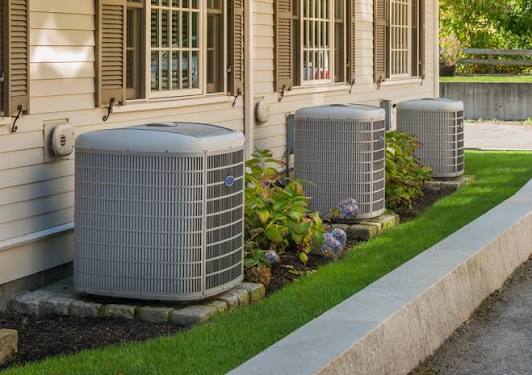
Here's a conversation that happens a hundred times a week across Central Texas: a tech climbs down from the attic, wipes his face, and says the coil's gone and the compressor's weak, and replacement is the smart play. The homeowner asks the only question that matters — "how much?" — and gets a shrug and a "depends."
He's not wrong. It does depend. But "depends" isn't an answer you can budget against, so this guide is the answer he should have given you: the actual 2026 installed ranges by system size and efficiency tier, the install factors that move the number up or down, and the rebate money most homeowners leave on the table.
First, throw out whatever number your neighbor paid in 2019. Between the 2023 SEER2 efficiency mandate, the 2025 refrigerant transition to R-454B and R-32, and plain equipment inflation, replacement costs have stepped up roughly 20–30% from pre-2023 pricing. The new refrigerants also mean matching outdoor-and-indoor equipment — the era of swapping just the condenser and limping along is effectively over.
Second, know what you're actually buying. "A new AC" is really four purchases in one: the equipment, the design (sizing and airflow), the installation labor, and the code items — and the industry's dirty secret is that the middle two matter more than the brand on the box. A mid-tier system installed brilliantly beats a premium system installed carelessly, every summer, for fifteen years.
Everything below assumes licensed contractors, permits pulled, and quotes delivered before work — which is the only way our network operates.
Skip the search-ad roulette. Tell us once, and we'll match you with a licensed, vetted Central Texas pro — price quoted before any work.
Let's get to the numbers.
| System size | Home sqft (typical) | Standard SEER2 (14.3–15.2) | Mid-tier (16–17, two-stage) | Premium (18+, variable) |
|---|---|---|---|---|
| 2 ton | 900–1,200 | $7,000–$9,500 | $9,000–$12,000 | $12,000–$16,000 |
| 3 ton | 1,400–1,900 | $8,000–$11,000 | $10,500–$13,500 | $13,500–$18,000 |
| 4 ton | 2,000–2,600 | $9,000–$12,500 | $12,000–$15,500 | $15,000–$20,000 |
| 5 ton | 2,600–3,300 | $10,000–$14,000 | $13,000–$17,000 | $17,000–$23,000+ |
Those are full-system (condenser + coil or air handler) installed prices for the Austin metro, mid-2026. Condenser-only swaps barely exist anymore thanks to the refrigerant transition, so budget for the full system.
Larger Hill Country homes running two or three systems: multiply accordingly, but ask about multi-system pricing — replacing two at once typically saves 10–15% versus separate projects a year apart.
Ductwork is the big one. If your ducts leak 25% of your air into the attic — common in 1990s–2000s construction — a perfect new system inherits a terrible delivery network. Duct sealing or replacement adds $1,500–$6,000 but is frequently the difference between a replacement that transforms the house and one that disappoints. A quote that never mentions your ducts is a quote from someone who didn't look.
Location and access matter: attic air handlers in tight Texas attics add labor; closet installs with code-required clearance updates add materials; rooftop or second-story condensers add rigging. Electrical work — a new disconnect, a panel circuit, occasionally panel upgrades on older Austin homes — runs $300 to a few thousand.
Code items are non-optional and belong in every quote: permit, float switches, drain pans, surge protection where required, and a proper commissioning with measured airflow and refrigerant charge. Contractors who skip permits are cutting a corner you can't see until it matters — resale, insurance, or a warranty claim.
Going from a 2008-era 13 SEER system to today's 15.2 SEER2 baseline cuts cooling energy roughly 25–30% before you buy anything fancy. In a Central Texas home running $250–$450 summer electric bills, baseline replacement pays a real dividend on its own.
The mid-tier (16–17 SEER2, two-stage) buys comfort as much as efficiency — longer, quieter cycles that hold humidity down, which matters more here than people expect. The premium tier (18+ variable-speed) shines in big, glassy, multi-zone homes and for owners who keep the house at 71 all summer. If that's not you, the mid-tier is Central Texas's value sweet spot.
And run the heat pump comparison before you sign anything: for most local homes a heat pump now beats straight-AC-plus-furnace on lifetime cost, and it unlocks the federal money below.
Federal 25C tax credit: up to $600 for qualifying high-efficiency ACs and up to $2,000 for qualifying heat pumps — real tax-bill money, not a gimmick. Austin Energy customers can stack local rebates on qualifying systems, and Hill Country co-op members should check PEC's programs. Manufacturers run seasonal promotions on top, typically spring and fall.
Stacked, a qualifying heat pump replacement can come in $2,500+ under sticker. The catch: equipment must meet specific efficiency thresholds and paperwork must be filed correctly — a competent installer handles this routinely and quotes it up front. If your bidder has never heard of 25C, keep bidding.
Timing is the last lever: replacement demand craters in October–November and February–March, and so do prices — the same project quoted in a July heat wave often runs 10–15% higher. If your system is dying slowly, schedule its funeral for the off-season. More on that in our best-time-to-replace guide.
Get three quotes, and make them comparable: same tonnage (verified by load calculation, not by matching the old unit), same efficiency tier, all-in with code items and permit. The spread will still surprise you — $3,000+ gaps between bids for near-identical scope are routine.
Demand a Manual J load calculation — the room-by-room math in our sizing guide — rather than a like-for-like swap. A shocking share of Texas systems were oversized on day one, and replacement is your once-in-15-years chance to fix that mistake instead of re-buying it.
Then weight the installer over the equipment. Ask who actually performs the install (employees or subs), what the commissioning includes, and how workmanship warranty claims work. The brand wars are mostly marketing; the install quality wars are where your comfort lives. That's the vetting our network does before you ever get a name.
Once you have three bids, read them the way an estimator would. Line one to check: equipment model numbers, not just brand and tonnage — "3-ton Carrier" spans a $2,500 equipment spread depending on tier, and a vague quote lets the installer decide later which end you paid for. Line two: what happens to the old refrigerant and equipment — recovery and disposal is a real cost the pros itemize and the corner-cutters skip, sometimes straight into the atmosphere. Line three: commissioning. A quote that ends at "install and test" is thinner than one specifying measured airflow, static pressure, and refrigerant charge verification against manufacturer spec — that hour of measurement is the difference between rated efficiency and paying premium-tier money for mid-tier performance.
Also worth demanding: the workmanship warranty in writing (one year is weak; the good shops carry two to ten), and who registers the equipment warranty. Unregistered equipment often defaults from 10-year parts coverage to 5 — a paperwork failure that costs real money in year seven, and one a surprising number of homeowners discover only when claiming.
None of this requires expertise — it requires asking. The contractors who welcome the questions are, not coincidentally, the ones whose installs measure out right.
Most Central Texas shops offer financing, and the spread is wide: legitimate 0%-for-18-months promotions from equipment manufacturers on one end, and 24%+ same-as-cash traps with origination fees on the other. Rules that hold up: never let financing terms substitute for comparing the actual project price (a high quote at 0% still costs more than a fair quote at 6%); ask whether the advertised promotional rate carries a dealer fee baked into your price, because it usually does — often 5–10% of the project; and check your credit union's home-improvement or HELOC rates before signing anything at the kitchen table.
The rebate stack from earlier belongs in this math too: 25C credits arrive at tax time, not at purchase, so bridge accordingly. And if the quote conversation ever feels like a car dealership — today-only pricing, manager phone calls, payment-focused framing — that's cultural information about how the install will go. The contractors we match quote a number, explain it, and let you think.
Pulling it all together: verify the load calculation happened and ask to see it. Confirm exact model numbers for every piece of equipment, indoor and outdoor. Check that permit, code items, refrigerant recovery, and commissioning are itemized. Get the workmanship warranty in writing and confirm who registers the equipment warranty. Stack your rebates — 25C at minimum, utility programs where they apply — and get the qualifying model numbers in the quote itself so the paperwork can't fail later. Compare three bids on identical scope, weight the installer's reputation over the equipment badge, and if the timing is at all elective, buy in the off-season when calendars are soft.
Fifteen minutes of that diligence routinely moves the final number by thousands of dollars — or moves the same dollars into a dramatically better install. Either way it's the best hourly rate you'll earn this year. And if you'd rather start with contractors who've already been vetted, quoted straight, and held to price-before-work: that's the front door we built.